
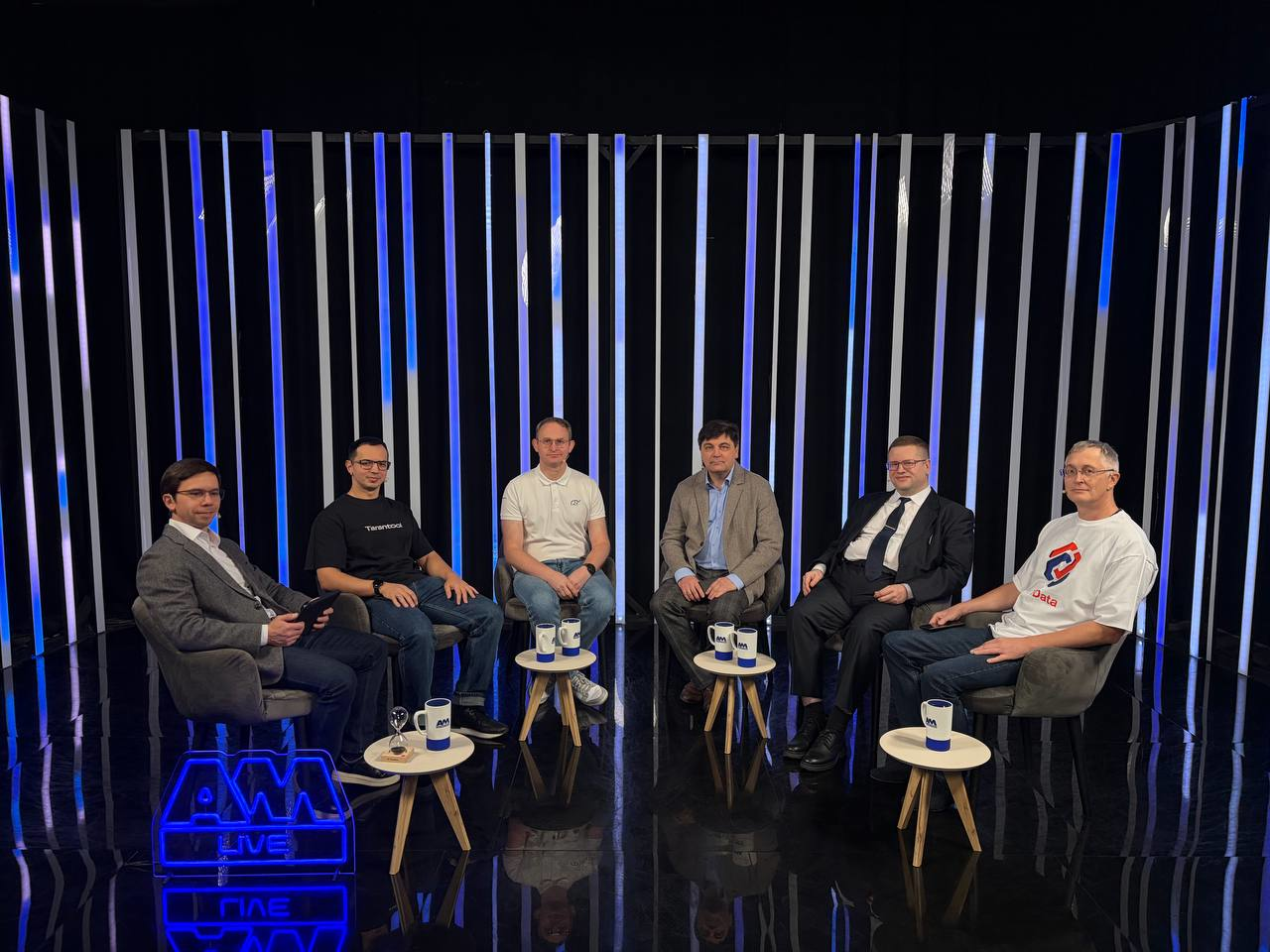
Igor Turkanov, Deputy CEO of JSC Granit Concern, took part in the AM Live discussion “Russian DBMS 2026: Market, Regulation, Migration and Forecasts.” Other participants included representatives from Postgres Professional, Diasoft, VK Tech, and Sovremennye Sistemy.
He drew attention to the fact that the volume of stored data roughly doubles every two years — a trend that will only accelerate as AI proliferates and AI-generated content accumulates. This creates a sustained, long-term demand for data management solutions independent of the cyclical dynamics of import substitution.
“Given artificial intelligence and the storage of AI-generated content, this trend will most likely continue over the next five years. Whether system owners want to increase their investment in DBMS or not — they will have no choice. They will simply be storing more data.”
Turkanov also identified a systemic problem in the Russian market: data is often archived as early as three months after creation, whereas effective AI agents operating on local data require significantly longer retention periods and architecturally sound storage design.
“Analytical databases are primarily designed for rapid, transient stream analysis, while transactional data stores remain underdeveloped in this country — because very little information is stored on a permanent basis: three months, and it goes to the archive.”
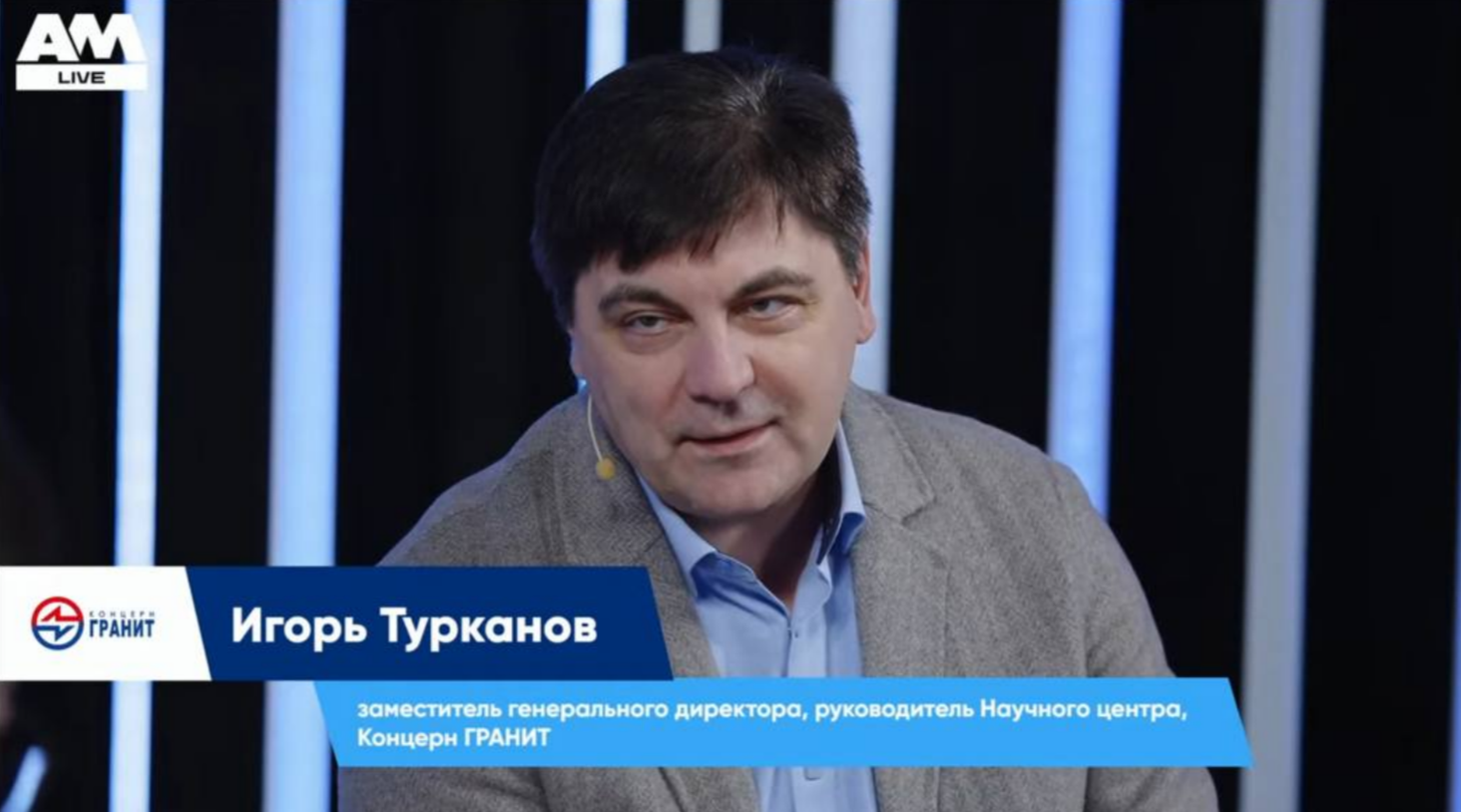
In Turkanov’s assessment, by 2027 AI will be determining the fate of databases across the corporate sector.
“All DBMS that remain active on the market will be fused with AI agents. It will no longer be clear: is it an AI agent using a DBMS, or a DBMS that contains a set of AI agents?”
He presented the AIST AI module built into the Kvant-Hybrid DBMS, which enables natural-language queries against the database:
“Everything a person needs from a database in their day-to-day work — regardless of how it is structured, how many tables it contains, how they are linked — whatever they ask in plain human language, the database will answer correctly. In this way, a universal transactional database becomes a true knowledge cloud. That is the direction all enterprise systems are moving.”

Turkanov emphasized that the regulator’s requirements did not emerge arbitrarily — they were partly a response to real incidents involving data leaks during server hardware decommissioning. In essence, this is a mechanism for raising the maturity of the entire industry:
“FSTEC is not simply a regulator — it is a framework that compels DBMS vendors to undergo laboratory testing. We submit the entire codebase, and it is tested for undeclared capabilities — backdoors, in essence. This is a fairly deep-level analysis, and identifying such features in the process fundamentally cleans up the code.”
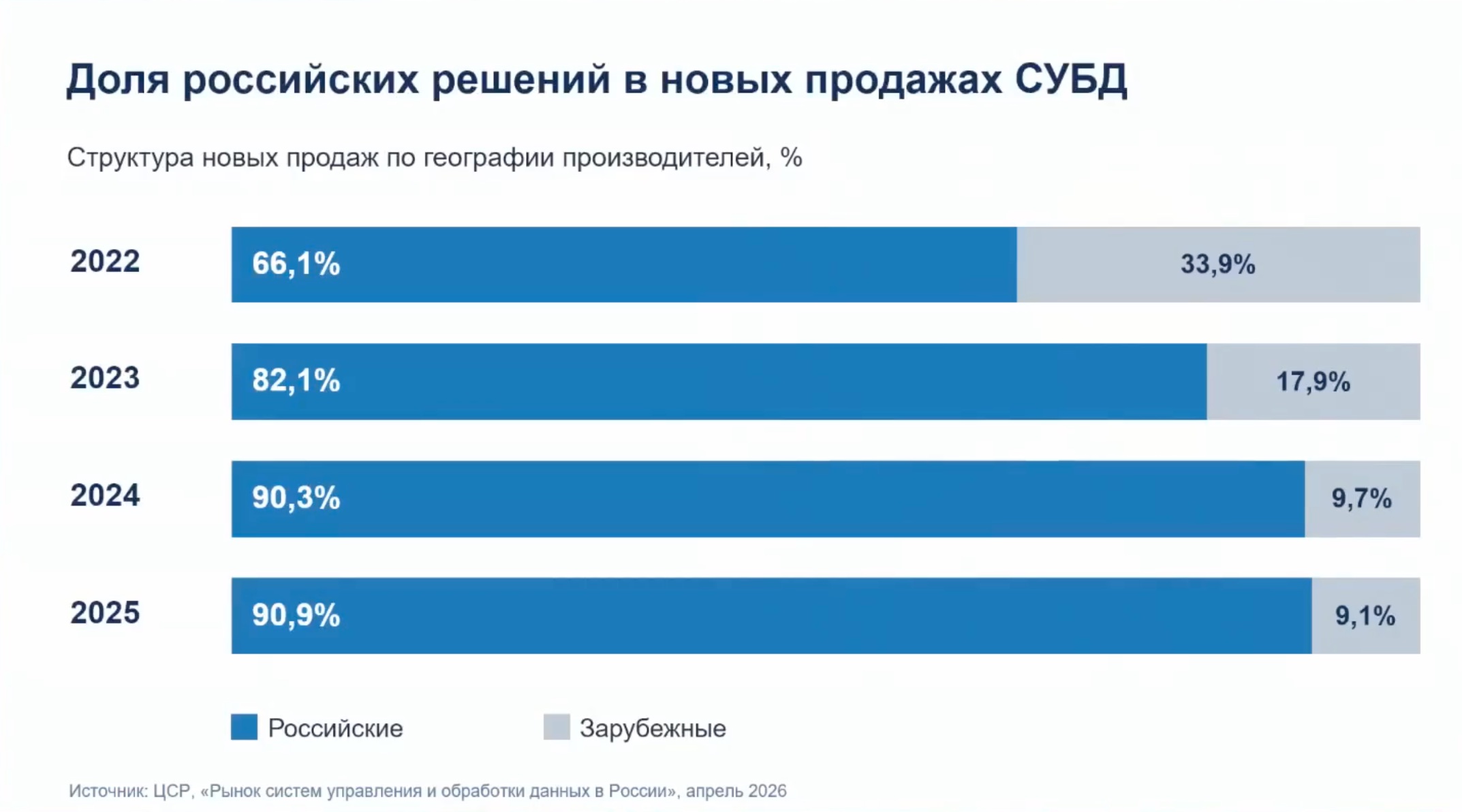
Migrating complex business logic implemented in foreign systems to domestic DBMS remains an extremely labour-intensive task — even when syntactic compatibility is formally maintained. Turkanov identified the core contradiction: the banking sector has yet to complete its transition largely because it continues to benchmark Russian solutions against Oracle on the same parameters of speed and reliability — and has not yet achieved equivalent results.
The challenge of clustering is particularly acute: PostgreSQL scales non-linearly, and the problem of synchronising local nodes after a connection failure has not been resolved to the same level of maturity as in Oracle. In Turkanov’s view, this is a temporary gap that the market will close.
“Russian solutions are not yet on par with Oracle in terms of clustering — but this problem will be solved in time,” he noted.
He also addressed the human capital dimension of migration. A DBA equally proficient in both PostgreSQL and Oracle is a rare find. Maintaining fluency in multiple dialects simultaneously makes an administrator indispensable — and therefore a vulnerability in the infrastructure. After migration, specialisation proves more valuable than versatility.
Turkanov described the migration process without illusions: it is not a matter of flipping a switch, but of running the old and new systems in parallel while continuously comparing checksums. With the right approach and tooling, the actual timelines turn out to be entirely manageable — as demonstrated in practice by the Kvantom team:
“We have an example of migrating a high-load system from Oracle — we completed it in 3.5 months, which is a perfectly reasonable timeline, and we did it at a reasonable cost,” said Igor Turkanov.
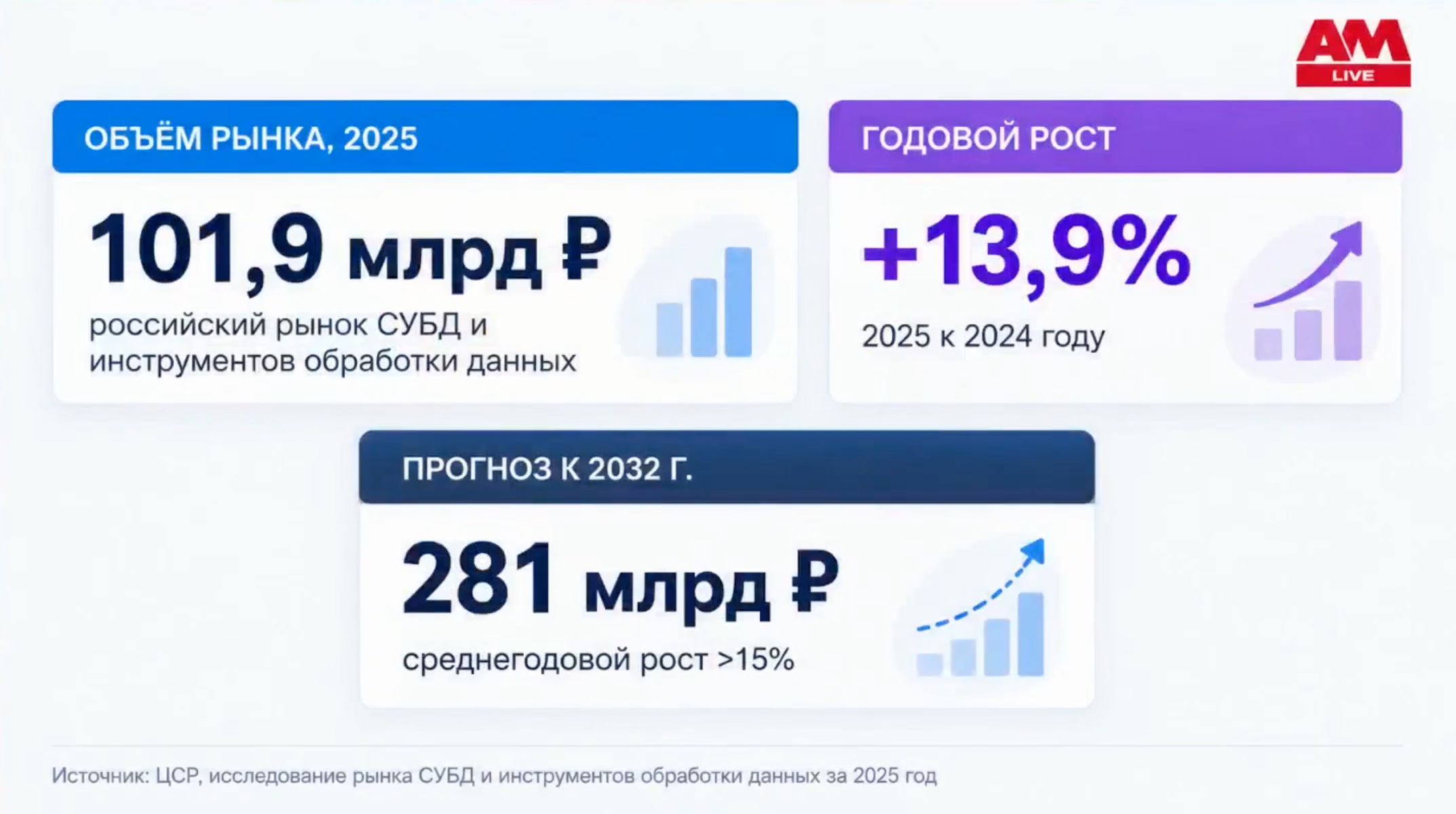
According to data from the Centre for Strategic Research cited during the discussion, Russia’s DBMS market and related services reached 101 billion rubles in 2026, growing at approximately 14% per year; by 2032, the market could reach 281 billion rubles. Among respondents to a live poll conducted during the broadcast, 62% cited regulatory requirements as the primary driver of migration to domestic solutions, while 37% named the complexity and cost of migration as the main barrier.